
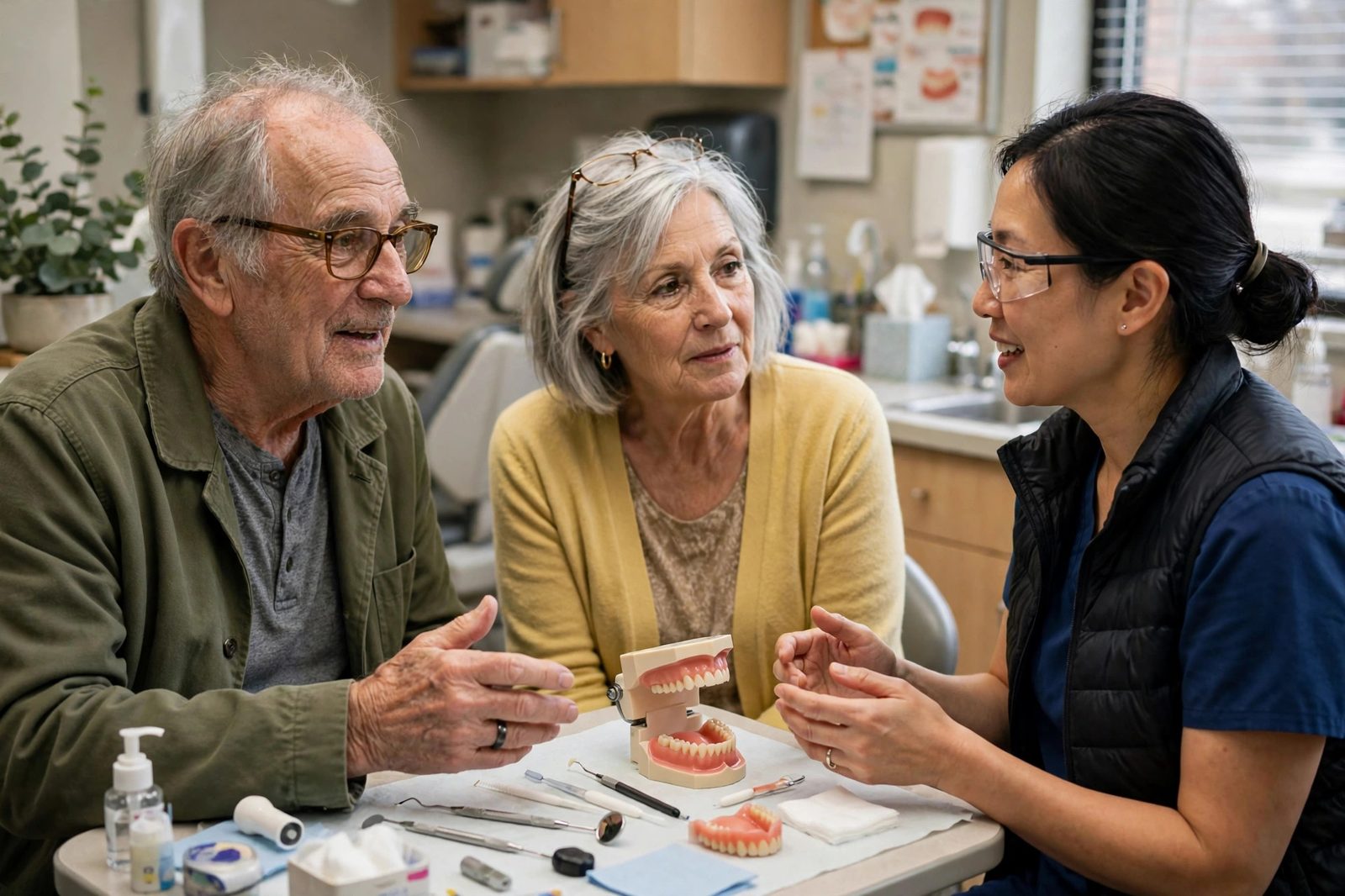
Comparing full vs partial dentures in Richmond Hill comes down to what you still have: a partial denture fills gaps while keeping your sound natural teeth; a full denture replaces an entire arch when no teeth remain, or when the last teeth in that arch cannot be saved. This guide compares the two honestly, including who each option does not suit.
Both appliances are described in detail on our page for dentures in Richmond Hill at Mackenzie Smiles, which you can read alongside this comparison.
On this page
The short answer
Healthy natural teeth are worth keeping: they stabilise a partial denture, help preserve the bone around their roots, and give you chewing feedback no appliance fully replaces. A full denture is the answer for an arch with no teeth left, or only teeth whose condition makes keeping them unwise. Many patients use one of each — a partial in one arch, a full denture in the other.
Full vs partial dentures, side by side
| Full (complete) denture | Partial denture | |
|---|---|---|
| What it is / how it works | A removable appliance replacing all teeth in one arch, resting on the gums; the upper is also held by suction against the palate. | A removable appliance replacing some teeth in an arch, supported by the gums and by clasps or precision attachments on remaining natural teeth. |
| Typical lifespan | Professional prosthodontic guidance commonly reports that both types need relining as gums and bone remodel, with replacement often discussed after roughly 5–10 years of wear. Treat these as planning ranges from guidance, not guarantees — the pace of change in your mouth decides. | |
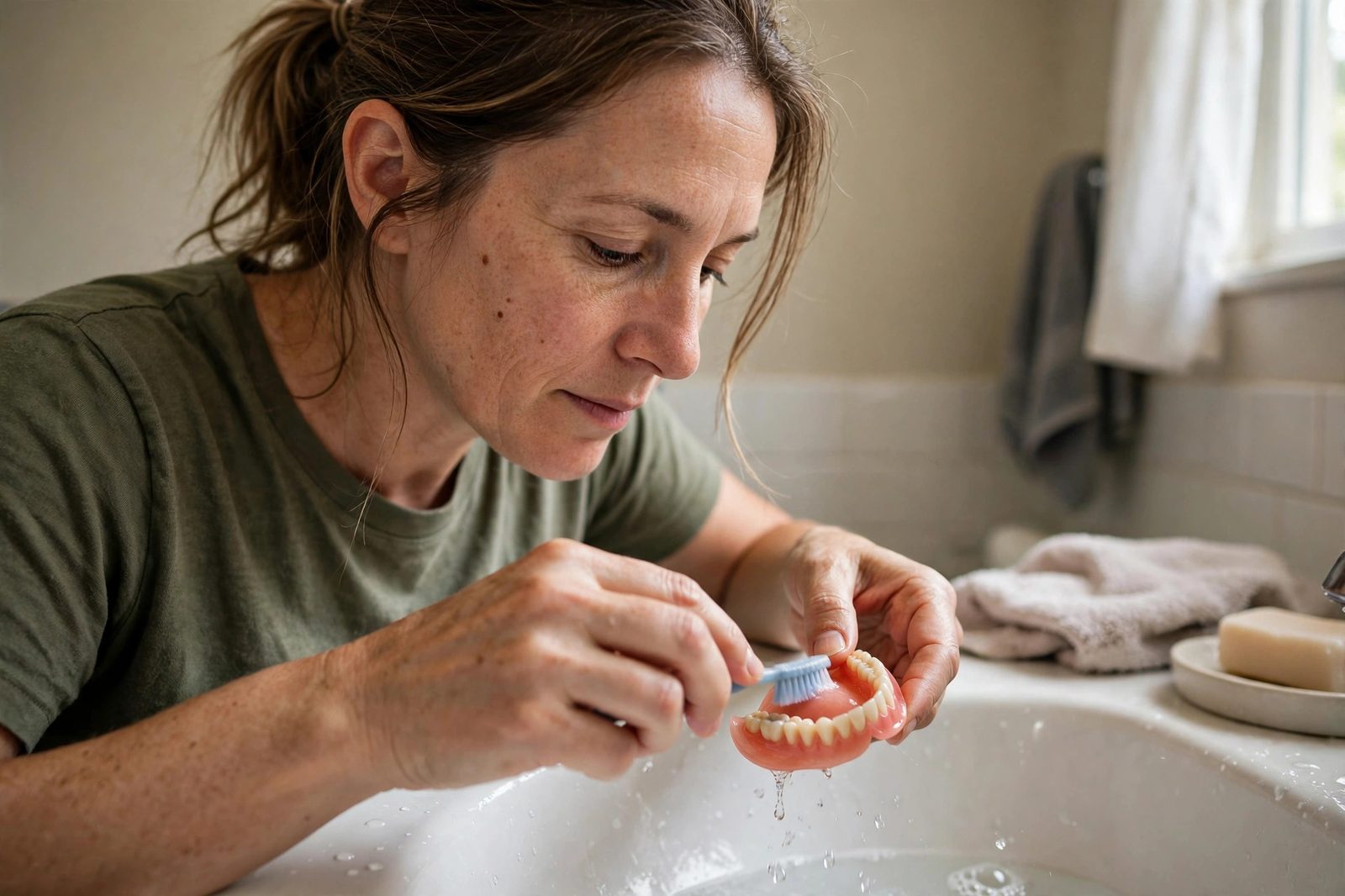
| Maintenance and care | Daily removal and cleaning, overnight soaking, and cleaning the gums and tongue. Fit is reviewed at check-ups as the ridge changes. | Daily removal and cleaning of the appliance, plus thorough brushing and flossing of the natural teeth — especially those carrying clasps, which collect plaque. |
| Effect on neighbouring teeth and jawbone | With no roots left in the arch, the jawbone gradually resorbs, which is the main reason full dentures loosen over time. | Remaining teeth preserve bone around their own roots and anchor the appliance, but they absorb extra chewing load and are monitored for wear, looseness and decay. |
| Who it suits and who it does not | Suits patients with no remaining teeth in an arch, or only teeth that cannot be saved. Lower full dentures challenge many wearers because the lower ridge offers less retention — this should be discussed frankly before treatment. | Suits patients with several healthy, well-positioned teeth and one or more gaps. May not suit patients whose remaining teeth are loose, badly decayed, or too few to support an appliance reliably. |
| Number of visits and timeline | Several appointments over a few weeks — impressions, bite registration, try-in, delivery, then adjustment visits. Extractions, if needed, are sequenced first. | Several appointments over a few weeks, similar in pattern, after any needed treatment to the supporting teeth is complete. |
| CDCP coverage | Dentures are a service the Canadian Dental Care Plan can cover for eligible patients, subject to the plan’s rules and preauthorization. Eligibility always comes first, and coverage is never assumed before it is checked. Federal details: Canada.ca — Canadian Dental Care Plan. | |
How to choose
Let the condition of your remaining teeth lead: sound teeth argue for a partial; teeth with a poor outlook argue for planning a full denture rather than building on a weak foundation. Then consider stability — a partial anchored by teeth usually feels firmer, particularly in the lower arch — and the daily cleaning commitment each option asks of you. Factors that affect cost include the number of teeth replaced, framework and material choices, and preparatory treatment, so an exact figure follows an assessment. Call Mackenzie Smiles in Richmond Hill at (905) 237-2353 to arrange one. Where imaging beyond the clinic is needed, CBCT imaging is referred out rather than done in-house, and patients who ask about sedation are offered nitrous oxide only.
Common questions
Not converted exactly, but if the last supporting teeth are later lost, a full denture is made for the arch. Sometimes a partial can be temporarily modified in the interim — your dentist will advise based on its design.
Most patients find a partial more stable because natural teeth anchor it. A well-made full upper denture can also be quite secure; lower full dentures are typically the hardest to adapt to.
It varies with how quickly your gums and bone change — often every few years. Looseness, sore spots and food collecting underneath are signs to book a review rather than reaching for more adhesive.
Yes. The gums, tongue and remaining tissues are examined, the denture fit is assessed, and oral cancer screening is part of routine care even with no natural teeth.
With practice, most wearers eat a wide range of foods, starting soft and progressing. Chewing force is lower than with natural teeth, and very hard or sticky foods remain challenging for many denture wearers.
You see the teeth set in wax, check appearance, bite and speech, and request changes before the denture is finished. It is the right moment to speak up about how the teeth look.
Each has trade-offs in strength, comfort, repairability and appearance that depend on your mouth. Your dentist will explain which framework suits your case rather than there being one universal answer.
Both types can be covered for eligible CDCP patients, subject to plan rules and preauthorization. Eligibility comes first — call (905) 237-2353 and we will help you check.
Mackenzie Smiles, Richmond Hill — (905) 237-2353.